Korean vs. Western Skincare: Understanding the Difference

Skincare enthusiasts across the globe have likely heard of the effective yet vastly different approaches of Korean and Western skincare routines. With K-beauty gaining increasing popularity in the Western market, many are wondering—how do these two philosophies compare, and which one is better for your skin?
If you’re new to skincare or curious about how the Korean regimen stacks up against Western traditions, this guide will help you understand their differences and how to select the right routine.
Core Differences Between Korean and Western Skincare
The variations between Korean and Western skincare are rooted in their philosophies, desired outcomes, and focus areas. Here’s a breakdown:
1. Philosophy and Approach
- Korean Skincare emphasizes prevention and long-term skin health. Rooted in Korean culture, skincare is seen as a self-care ritual rather than a chore. It prioritizes hydration, barrier repair, and achieving dewy, glass-like skin.
- Western Skincare focuses more on addressing existing skin issues and achieving quick results. The approach is often backed by clinical research, with an emphasis on evidence-based solutions such as retinoids, AHAs, and BHAs.
2. Ingredients
- Korean skincare leans heavily on natural and traditional ingredients like snail mucin, ginseng, and green tea. These are often combined with cutting-edge technology.
- Western skincare, on the other hand, emphasizes active ingredients such as retinol, vitamin C, and salicylic acid to target specific skin concerns like aging, acne, and hyperpigmentation.
3. Routine Complexity
- Korean skincare is known for its multi-step routine, which involves layering lightweight products to achieve optimum hydration and moisture.
- Western skincare usually opts for a streamlined approach with fewer steps, focusing on simplicity and clinical effectiveness.
The Korean Skincare Routine Breakdown
The 10-step Korean skincare routine is famous for the time and care it invests in your skin. Here’s how it works:
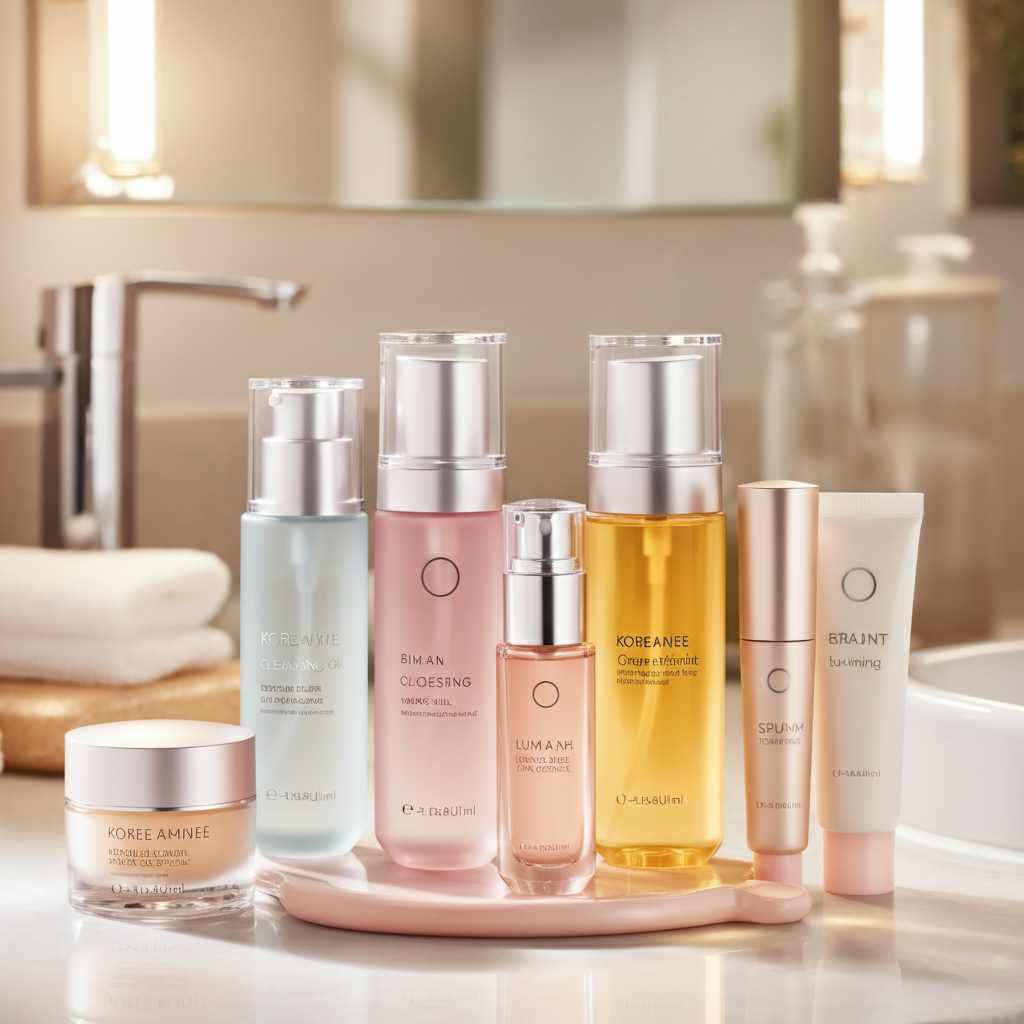
- Oil-Based Cleanser – Removes sunscreen, makeup, and excess sebum.
- Water-Based Cleanser – Cleanses remaining impurities.
- Exfoliator – Provides gentle exfoliation to remove dead skin cells (2–3 times a week).
- Toner – Balances pH levels and preps the skin for better product absorption.
- Essence – A hydrating and lightweight layer that enhances skin cell turnover.
- Serum/Ampoule – Targets specific concerns like dark spots or fine lines.
- Sheet Mask – A relaxing layer designed for deep hydration (as needed).
- Eye Cream – Hydrates and protects the sensitive under-eye area.
- Moisturizer – Locks in hydration and strengthens the skin’s barrier.
- Sunscreen – Protects from harmful UV rays (a daily essential during the day).
This routine is known for its meticulous attention to hydration, guided by the principle of layering lighter textures first.
Western Skincare Routine Breakdown
Western skincare tends to favor a simpler approach that’s results-driven. A standard routine includes:
- Cleanser – A product tailored to your skin type to remove impurities.
- Exfoliant – Often featuring chemical exfoliants like AHAs or BHAs for smoother skin.
- Serum – Power-packed with actives such as hyaluronic acid or vitamin C for targeted results.
- Moisturizer – Hydrates and nourishes the skin.
- Sunscreen – Protects against sun damage; an essential step in Western routines.
Each step is focused on minimizing effort while addressing key skincare concerns.
Selecting the Right Routine for You
Choosing between Korean and Western routines depends largely on your individual skin type, needs, and lifestyle. Here’s how you can decide:
- If you love a holistic skincare ritual and have the time for a multi-step process, go for Korean skincare. It’s particularly great for those with dry or sensitive skin.
- If you’re pressed for time or prefer potent, result-focused products, you may find a Western routine more practical. Ideal for individuals with oily or acne-prone skin.
Ultimately, listening to your skin and experimenting with what works best is the key to finding a routine that delivers results.
Q&A Guide: Common Questions About Korean and Western Skincare
Q1. Can I combine elements from both Korean and Western skincare routines?
Absolutely! Many skincare enthusiasts create hybrid routines, combining the best of both worlds. For example, you can use a Korean essence for hydration and a Western retinol serum for anti-aging.
Q2. Is the 10-step Korean routine necessary every day?
Not at all! It’s more of a guide than a rule. Feel free to adjust it based on your skin’s needs or the time you can dedicate daily.
Q3. Which routine is better for acne-prone skin?
For acne-prone skin, Western skincare’s focus on active ingredients like salicylic acid and retinoids can offer faster results. However, Korean products like tea tree oil-infused cleansers and calming essences can also be beneficial.
Q4. Is sunscreen equally important in both routines?
Yes! Sunscreen is a crucial step, whether you follow a Korean or Western routine. Protecting your skin from UV damage helps prevent premature aging and skin cancer.
Conclusion
Skincare is deeply personal, and both the Korean and Western approaches offer unique benefits. By understanding the core differences and tailoring a routine to your needs, you can achieve healthy, glowing skin.
If you’re ready to find what works for you, it’s time to start experimenting—your perfect skincare routine is just a routine away.