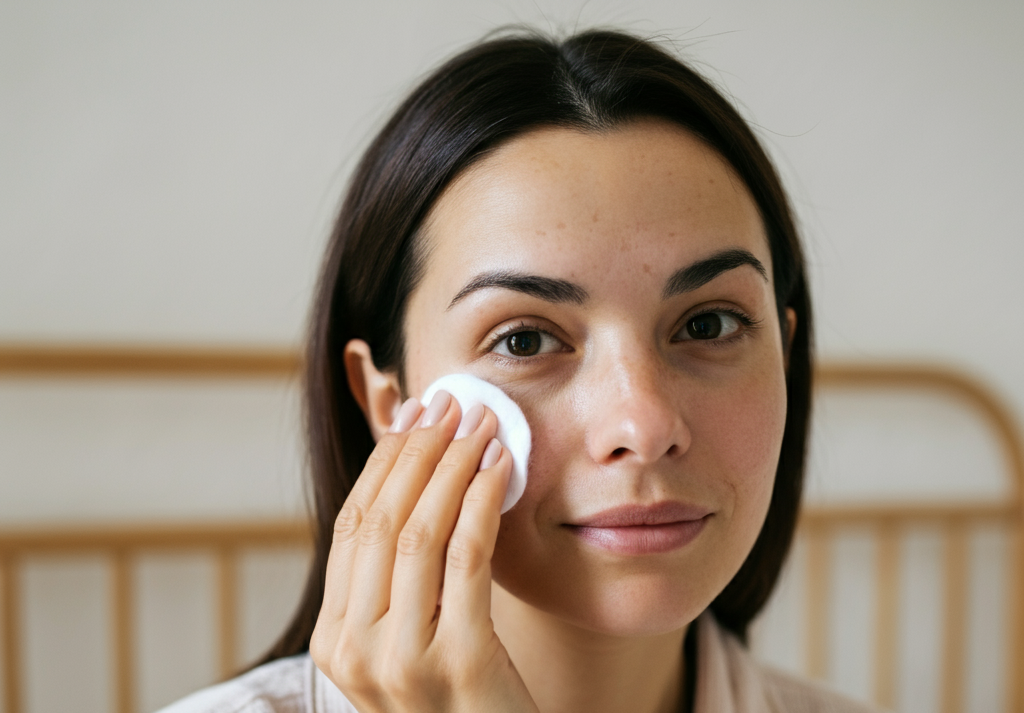
Should You Be Exfoliating in the Morning or at Night?


Is there a right time to exfoliate—day or night? We asked the experts to break it down.
For many of us, establishing a morning and nighttime skincare routine is second nature. Typically, mornings lean toward simple essentials, while evenings focus on deeper cleansing and repair. But when it comes to exfoliation, it’s easy to feel lost. Should you be exfoliating as part of your AM skincare or saving it for your PM routine? If you’ve been wondering too, you’re not alone—and we’re here to clarify.
First, What Exactly Do Exfoliators Do?
Before decoding the timing, it helps to understand the purpose of exfoliation. Our skin naturally renews itself about every 28 days, yet dead skin cells tend to build up, causing clogged pores and a dull appearance. Exfoliators remove these dead cells, revealing smoother, brighter skin beneath and giving your complexion a fresh, radiant look.
There are two main types of exfoliators: physical and chemical. Physical exfoliators use textured ingredients like sugar, crushed seeds, or gauze pads to buff away surface skin cells. Chemical exfoliators, on the other hand, rely on acids like AHA, BHA, or PHA to dissolve dead cells, providing a deeper clean for your pores. While the former focuses on surface-level exfoliation, the latter penetrates below the surface for long-lasting results. Neither type is inherently “better”—it all depends on your preference and skincare goals.
Morning or Night? Which is Better?
Good news—you can exfoliate either in the morning or at night, but there are a few important guidelines to consider based on the type of product you’re using.
For Physical Exfoliators
Scrubs and masks, like those containing sugar or natural cellulose, are generally safe for use during any part of the day, whether you’re starting your morning fresh or ending the evening with some self-care. Physical exfoliators, such as the Brightening Peeling Gel or Black Sugar Wash-Off Mask, don’t interfere with your skin’s sensitivity to the sun. However, it’s best to limit physical exfoliation to once or twice per week to avoid overdoing it.
For Chemical Exfoliators
Chemical exfoliators—including toners or serums with AHA, BHA, or stronger acids—are better suited for nighttime use due to their potential to increase your skin’s sensitivity to sunlight. Products like BHA-based toners or the Neogen Bio Peel Gauze (which combines physical and chemical exfoliation) can still be used during the day, but you’ll need to be cautious. If you include a chemical exfoliator in your morning routine, be sure to follow it up with an antioxidant and a generous layer of broad-spectrum sunscreen to protect your skin from UV rays.
For High-Concentration Acids (Above 7%)
More intensive chemical peels or exfoliators with acid concentrations exceeding 7% should generally stay reserved for nighttime use only. These stronger acidic formulations work deeply to renew the skin but can leave it especially vulnerable to environmental damage, which is more pronounced during exposure to daylight.
Key Takeaways
While there’s no strict rulebook for exfoliating—timing ultimately depends on your lifestyle and skincare needs—it’s crucial to understand how your products interact with your skin and your environment. If you choose to exfoliate in the morning and your routine includes chemical exfoliants, always prioritize using SPF to shield your skin from UV damage. And remember, moderation is essential since over-exfoliating can lead to irritation rather than a glowing complexion.
By establishing a thoughtful and informed exfoliation routine, you can uncover the radiant, healthy skin you deserve.